
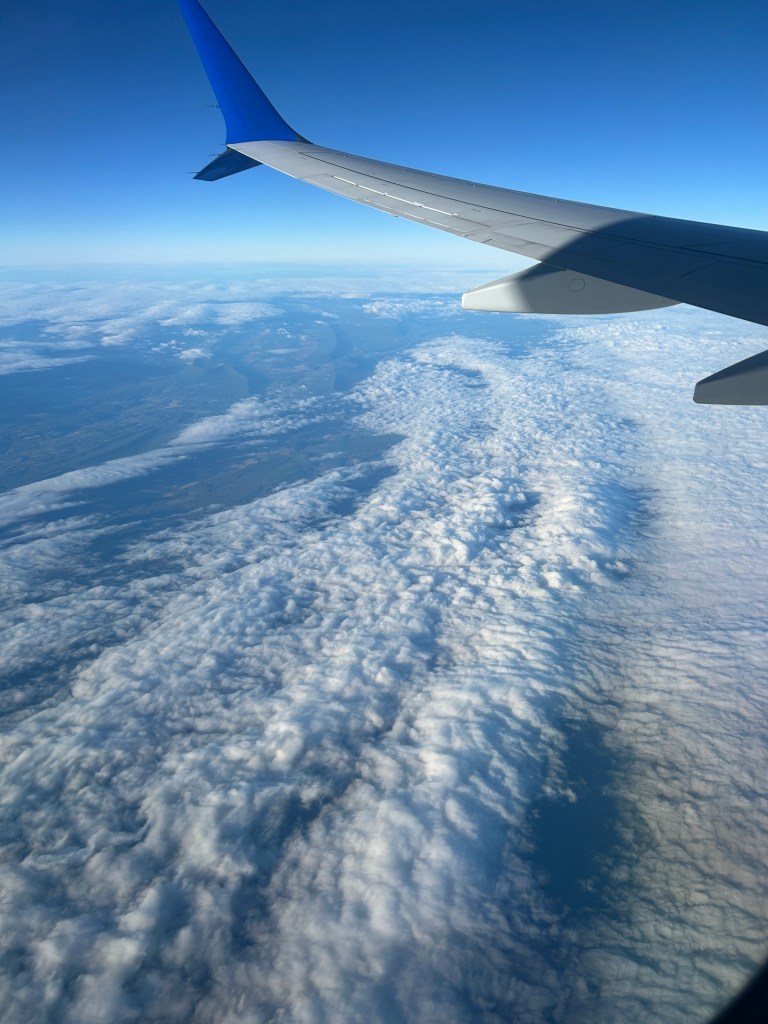
Among domestic flag carrier airline crews, there is little greater prestige than being assigned to operate, work, and passenger schmooze through an oceanic crossing. The lower the flight number, the more expansive (and expensive) the internal cabin will be, with grating revenue managers in cubicles from Atlanta to Chicago and Seattle designating these flights as characteristic of the airline’s best service and also its highest margins. Name a so-called world city plus your airline of choice and chances are it’ll be a two or maybe even one-digit flight number.
And the US is home to a handful of world cities, the number of which is up for infinite ear-straining, synapse-frying debate. But the merits of New York City and Los Angeles as globe-defining cities are cemented, no matter what hundreds of thousands of pages of indictment-worthy Twitter, Reddit, and Facebook discussions espouse. As a result, frequent air shuttle service between these two cultural arenas is similarly important and arguably more operationally demanding than coordinating a North Atlantic tracked, Engines-Turn-Or-People-Swim flight release.
These domestic flights receive priority for most everything and often operate with widebody aircraft, premier cabin designs, and even food service. Shocking for those of us who sit behind the wing, right? This isn’t inherently unfair, though, as airlines (not their employees) are in it for the money alone. But if you’re a transplanted, up-to-nothing, big city-dweller flying back to your medium or small-sized hometown, it sure feels that way.
Fly back to the Capital of California (I do love a good float down the American River) from Newark and you’ll get the picture. A three-decade-old, hatchback of a 737-700 with (god forbid) no screens and a sheet’s worth of inoperative stickers will be flying you 2500 nautical miles at a pilot-degrading, passenger-unknowing crawl of Mach 0.78. The same rings true for half-note-worthy transcontinental destinations like Portland, Oregon, or Albuquerque, New Mexico, where airline cost and scheduling indexes only add up with more junior crews, older tail numbers, and circadian rhythm-challenging block times.
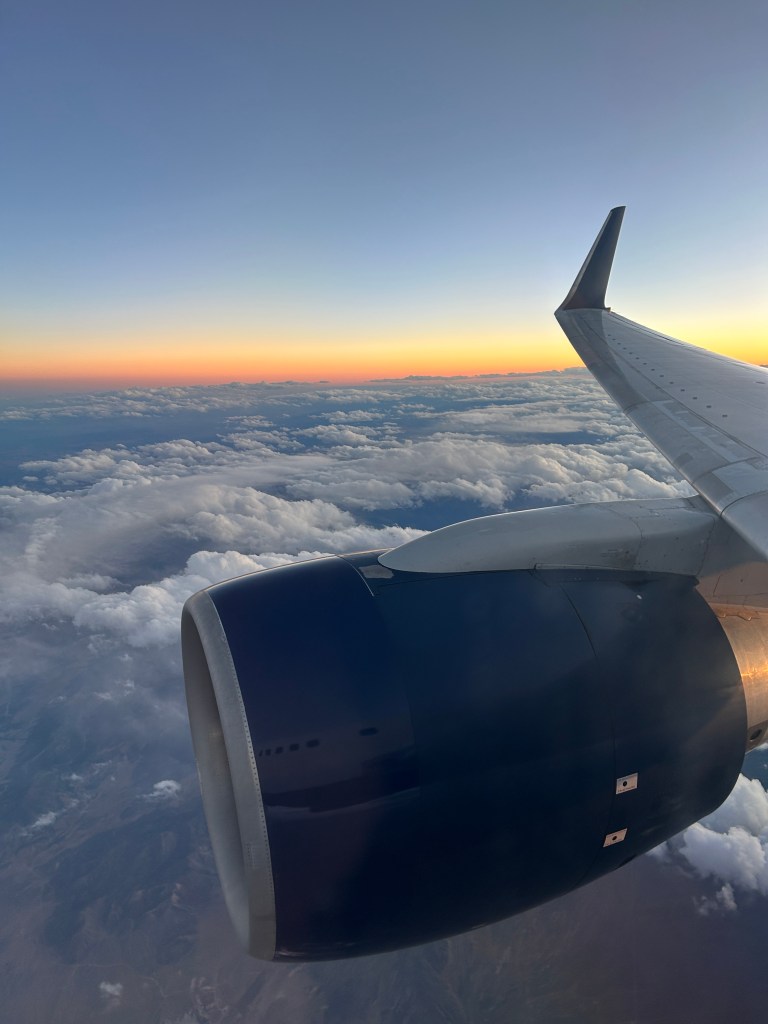
So what if your flight to Boise gets delayed? It’s not like you—one class of paying passenger—are the same as LAX or SFO-bound passengers, at least not to the Ed Bastians and Scott Kirbys of the world. And how come LAX-JFK and LAX-EWR leave on time when LAX-BDL is delayed by five hours? Well, more important people are going to New York, of course.
But there is some solace to be had, for those of you recollecting on the feeling of terminal chairs against your overnighted tailbone as well as for those wondering why you’re reading this in a music publication. And it comes from Brooklyn, sort of.
With an album cover reminiscent of searching for shapes in the sky on a red-eye night, you might think that Black Marble’s leading LP is fit for darkness, and you’d be right only in the literal. It might not be long enough to last you the entire 150-knot winter headwind, East-to-West flight time of six hours, but it is long enough for a climb to FL320 and for your crew of two upfront to check in with Cleveland Center. No matter your rude, mysterious, or simply asleep seatmates, A Different Arrangement is the ethos of red eye, transcon flying to nowhere in particular. I would know, too, as I’ve ridden from Kennedy or Liberty to PDX more times than I can count now, and almost always at night.
In what is almost certainly an insult to Chris Stewart and Ty Kube, there is no need to start with the opening track Cruel Summer, though proper listening from top to bottom does nothing but enhance the genius of this record. 80s-style space exploration synthesizers blend with incessant but gentle drums on every track, creating a sensory drowning that ends only with a touch of the screen. Set the album to a mechanical loop and you’ll fall in and out of consciousness independently of your human wants, as muzzled, incomprehensible vocals flow together as if it were one hour-long lyric.
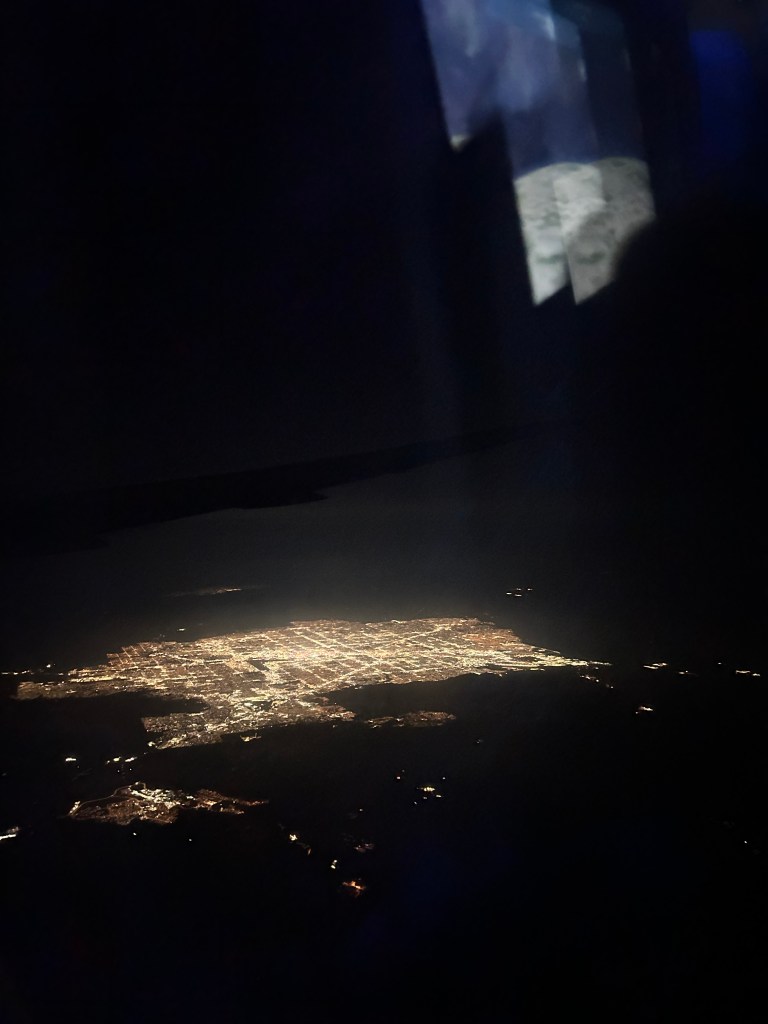
Identifying sizable metropolitan areas from six miles high is no real feat or even excitement, especially when you yourself aren’t stopping there. But a sole light amongst complete darkness begs a flow of wonder, unlike anything in most of our adult lives, as the quadruple-hit snare drum on Safe Minds matches the swaying fuselage yaw against crossing winds. You’re pushed down into your seat as the autopilot corrects to its set altitude by a margin of tens of feet and the metallic rapidity of bass on Static re-confirms that you’re traversing the sky while others drive and eat and sleep on the ground.
Coming back to New York, the speed feels true and is egged on by the droning, almost whining synths on Pretender, as the flight tracker shows a ground speed approaching 700 mph. Faster than most achieve anywhere else on earth. There is nobody to catch but it damn sure feels like we’re after something, as the sun rises against a closed-window cabin. The person in front of me cracks a window and films a timelapse of the pink and orange wisps as I, a person with much less motivation, appreciate it for storage and recollection down the line.
The cult-like applause beat of MSQ No-Extra is like that of every nervous flier, quietly clapping as everything goes according to the FAA-approved, dispatch-reviewed, pilot-certified flight plan on the commotionless journey. There is much to celebrate as the main gears impact the thousand-foot markers and the speed brakes pop—being alive and arriving for the passengers and being done for the flight crew. Sleep will soon arrive for the randomly selected bunch of employees whose job it was to watch over a cabin full of sweaty straphangers all night, and maybe they’ll listen to Last as its slow-moving melody begins winding down the album and their own unorthodox shift.
Truth be told, I would read the Mother Jones review of Black Marble’s first real album if I wanted a true music review. And I didn’t quite grasp seeing Black Marble in person, as my attendance at their Knockdown Center show many falls put a face and a much too present voice to what was previously a nebulous, confined echo chamber reserved for marveling in the administrative and all-too-real wonders of commercial flight. But next time you board a flight where the mood is sleepy if not somber and the destination is liminal for mental or geographic reasons, where your mind goes as this album plays won’t be scared or frustrated or even sad. It’ll just wander.
 Emmet White